
Emi Beihold Learns Self-Love on ‘Tales of a Failed Shapeshifter’
Life has a funny way of challenging us to think beyond ourselves. It can uproot everything, and everyone we think we know. On her debut album, Emi Beihold gives us a glimpse into the things she’d rather forget.
In an interview with Crucial Rhythm, Beihold said “there are some songs that come out in ten minutes, and some songs that are truly multi-year tweaks.” She began writing music when she was 13, and has since written four hundred songs. She went platinum with her single ‘Numb Little Bug’ in 2022. In it, she talks about the emptiness she feels: “Like your body’s in the room, but you’re not really there/Like you have empathy inside, but you don’t really care.” Beihold told Melodic Magazine that the song propelled her into the music scene before she was ready. “I feel like being an artist there’s a lot of groundwork that needs to be laid and a lot of assurance; kind of who you are as an artist, what your visuals are, your branding, and stuff like that,“ says Beihold.

She released her second EP ‘Egg In The Backseat’ in 2022. It received favorable criticism, with reviewers remarking on its catchy production and relatable lyrics. The title track, between successive piano notes, recounts how the guy she’s seeing is bad but irresistible; “You’re how I’m acting, I can’t forget the/Night that you cracked me, like an egg in the backseat.” Her playful attitude makes the song an earworm.
Beihold got her start on Tiktok, posting indie pop music. The transition from sole creation, to having the record label Republic (representing pop artists like Taylor Swift, Lorde, and Florence and the Machine) behind her, caused her to feel self-conscious. Beihold began to compare herself to other female artists. Over the next few years, she went to outpatient therapy to rediscover herself. “I feel like I’ve taken a step back and realized how to make music fun again,” Beihold told Riff Magazine.
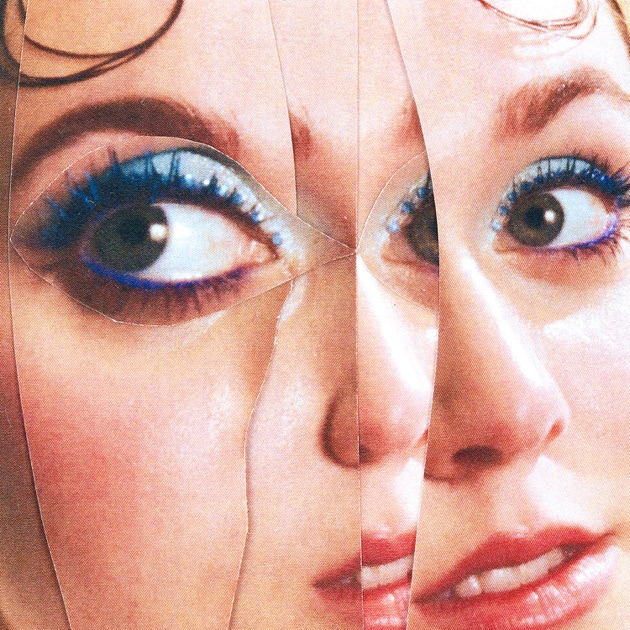
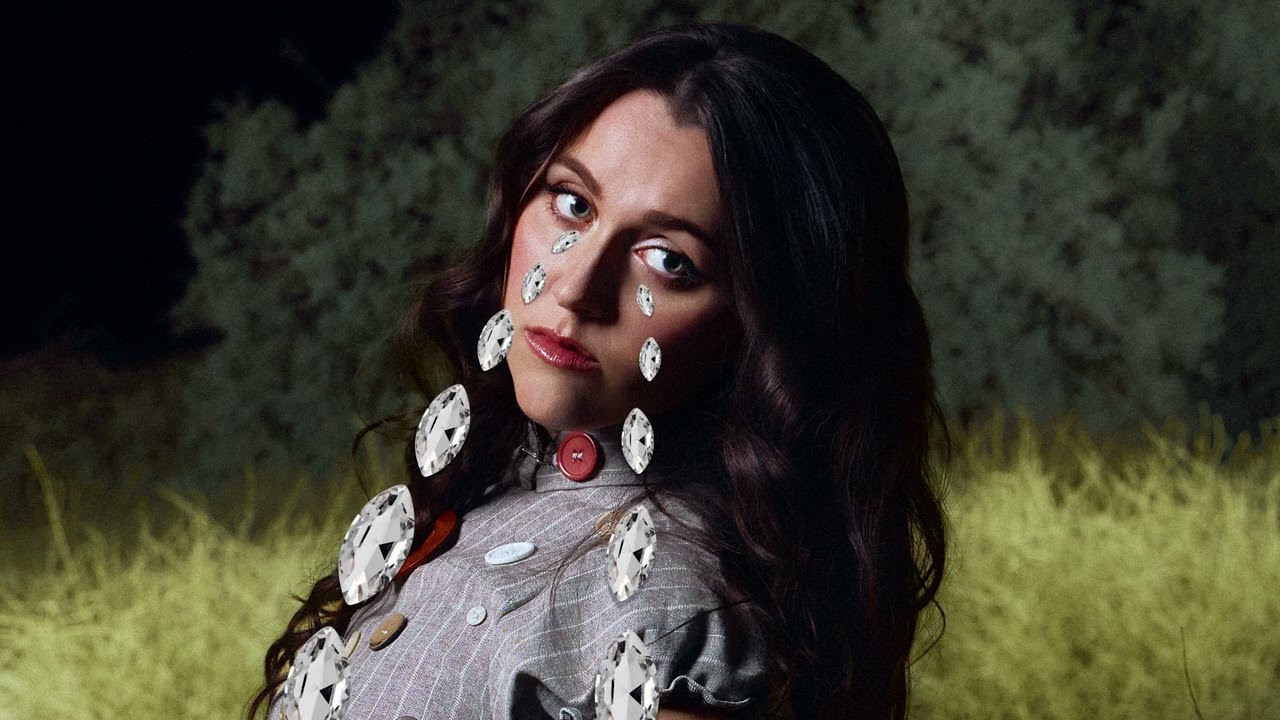
This sentiment is reflected in Beihold’s album ‘Tales of a Failed Shapeshifter.’ Released on February 27, the album incorporates synth and classical instrumentals to create a quirky, off-beat sound. It’s reminiscent of Marina Diamandis’ musical style. This isn’t surprising, given that Beihold worked with producer James Flannigan (who’s also credited on Marina’s album ‘Ancient Dreams In A Modern Land’). Beihold’s melodic voice compliments her theatrically optimistic lyrics.
Her first track ‘Scared of the Dark’ tackles the childhood fear of the dark. It begins with a string instrumental that you might hear in a period piece. Beihold’s voice starts out soft, then abruptly deepens. The percussion works its way in as she exclaims that she can’t be alone. “I’m scared of the part when no one else is home.” Her layered vocals create a funhouse effect, in which her past self answers her present self. Beihold’s second track ‘Brutus’ is female jealousy seen through an historical lens. The song examines the relationship between Caesar and Brutus, two characters from Shakespeare’s Julius Caesar. In the play, and in real life, Brutus betrays Caesar by stabbing him in the back. Beihold gives a cheeky nod to this pivotal moment: “But you’re Caesar and I’m Brutus minus that part with the knife.” Beihold sardonically describes her enemy as “an obsessive revolutionary riot.”
‘Unicorn’ flips the script Beihold has written so far. A haunting chorus opens the song, with Beihold singing “Haven’t you heard I’m a new girl, not the same.” She compares her subject to a faint memory. With a synthy beat drop, Beihold reveals that she thinks about him all the time. She urgently identifies herself as “his unicorn.” She refers to the mythical creature, which in most folklore has magical qualities. The track becomes a fantastical remix, borrowing from Handel’s harpsichord piece “The Passacaglia.” Its repetitive chorus doesn’t drown out the song’s message; rather, it emphasizes Beihold’s need to be special. Her fourth track ‘Van Gogh’ is her most art-poppy. In a breathy tone, she describes how her innocence drowns in “blues, yellows, and greens.” Beihold proclaims herself to never be the type to make a scene. “I’m Van Gogh/Everyone knows I’m spiraling like” ricochets into your ears. Beihold says the“black dog” begged her to stay, often a symbol of depression or death. Light piano notes cascade, then reverse as she recounts her attempt to reclaim “the girl she was before.” Like the famously manic and depressive artist, she won’t stop until she’s “cut [her] ear right off.”
Her fifth track ‘Hot Goblin’ is an unorthodox fairytale. Beihold said that the term ‘hot goblin’ means “embracing your insecurities and messy parts, while still loving yourself completely and not feeling less than.” You’re greeted with spunky, electric notes that are often prevalent in dance-pop. Beihold declares herself “unapologetic, so divine/Until the moment that the stars don’t align.” The chorus explodes, with a punky bass guitar outlining that, indeed, Beihold can either be a dream or your worst nightmare. As a certified ‘hot goblin,’ she claims both her problems and perfections. Beihold’s sixth track ‘Exorcism’ details her struggle to be okay with herself. She pays too much for therapy to be left with ‘maybe-words that don’t work for me.’ In the second verse, Beihold tries to feel better using meditation, but things get strange; “half-baked thoughts, false information/Entangled in my brain.” An exorcism, then, seems the only solution.
Beihold’s songs ‘Lottery’ and ‘Soup!’ do two things: showcase her vocals, and show that her feelings don’t exist in a vacuum. ‘Lottery’ is a classical musing about her future. Beihold wonders what it would be like to be rich and famous. “My kids would fight over the will, so I’m told and/They would come for the money, but never for me.” An orchestra blares and coughs as she tries to convince herself that she’s “lucky that I don’t play the lottery.” Her runs are as clear as an operatic singer breaking glass. In ‘Soup!’ Beihold criticizes herself for having unsupportive friends. She riffs off the contents of soup, like “chew” and “stew.” Her lyric “You are what you eat-eat-eat-eat-eat” is an apt summation; ‘Soup!’ is narratively weak, but it’s fresh and fun.
‘Shiny New Things’ might sound familiar, and Marina’s song ‘Shampain’ comes to mind. Both songs tackle spending money to cope with feeling rejected. Beihold says that her inattentive lover has been “workin’ the room like the United Nations.” Beihold’s voice barely rises above the cacophony that is a party at its peak. Following a refrain of “Shiny new things,” she says that she’s on to the next one. Her tenth track ‘Strong Medicine’ leans into the personal. Her lower pitch draws attention to the narrative, where Beihold picks apart her depressive symptoms. She sings,“Have you smelled the flowers as they decay/Watch a blue sky fade into gray.” This imagery plants us in her brain. The chorus suddenly amplifies, with her digitally altered voice repeating “Strong, strong medicine!” Beihold, in need for medical euphoria, is a “pretty pessimistic specimen.” A strong dose of reality comes in her final track, ‘Won’t Let Go.’
‘Won’t Let Go’ begins with a voicemail from Beihold’s grandmother. In it, she says that she loves and misses her. Beihold told Riff Magazine “that voicemail was before her big mental decline.” Of her grandmother, she sings “So I’ll show you how much I care/Oh, I promise that I’ll stay.” The traditional, piano-ballad is tear-jerking. Beihold wonders if she “used the time right, or did I not have enough to say”, which evokes painful nostalgia for one’s own grandparents.
She says, of her album, that “as dark as the world became for Beihold, the world of Shapeshifter is a bright one.” ‘Tales of a Failed Shapeshifter’ is a vibrant success from a new (and up-and-coming) artist. Her percussion and string-based production underscores her bittersweet meditations on love, loss, and finding yourself. Her delicate, ascending vocals encourage listeners to look back on our own lives, how we have changed, and who we’ve left behind in the process of forgetting. More importantly, Beihold asks us, “Did we leave ourselves behind?”
The album, with Beihold’s musical heartbeat echoing around us, assures us that she’s here to guide us out of the darkness.