

Max Webster’s Earnest: The Sensible Qualities of Camp
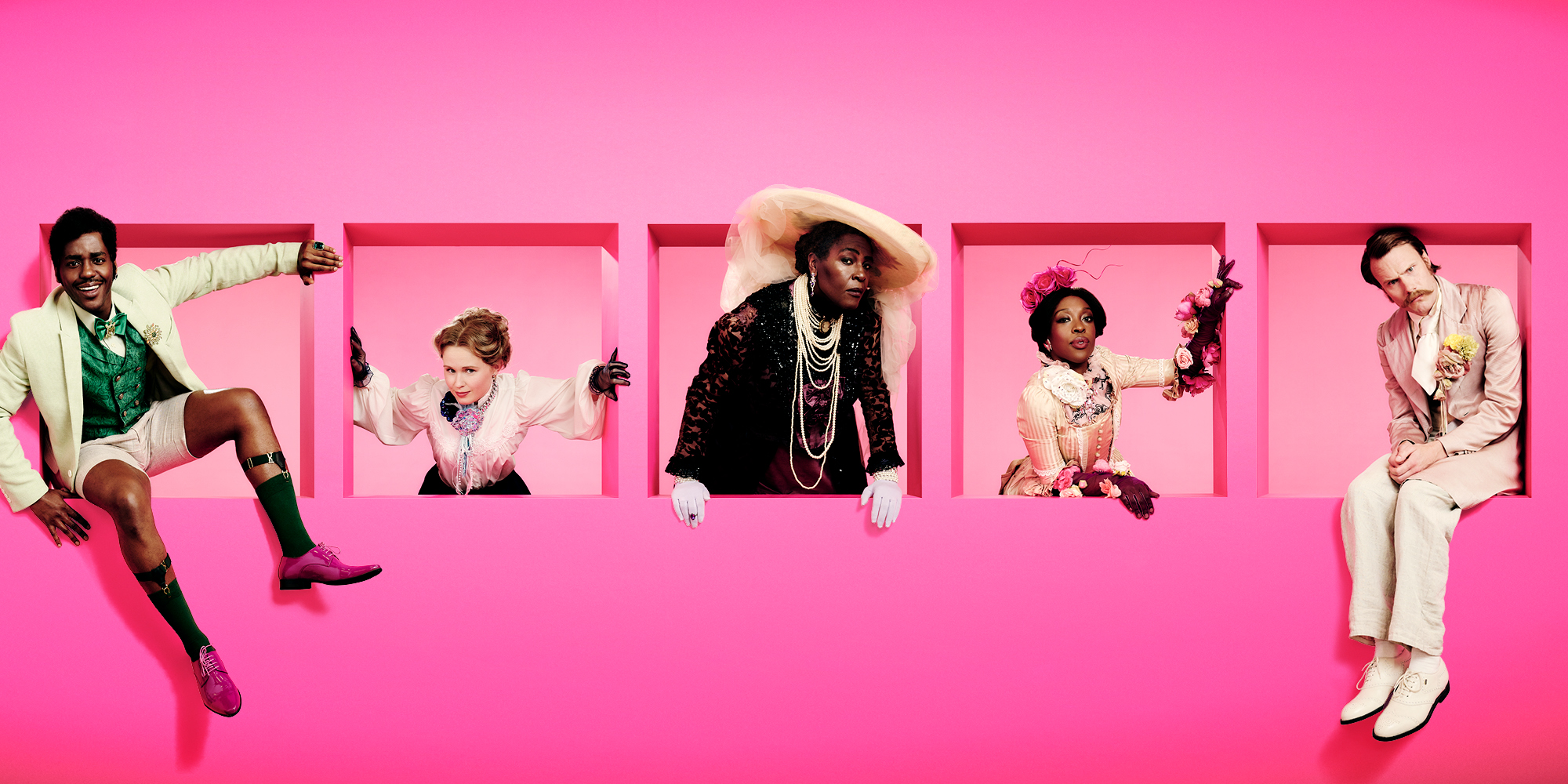
Keeping up with the National Theatre’s Take Your Seats! Initiative, Max Webster’s 2024 production of The Importance of Being Earnest, A Trivial Comedy for Serious People was released for limited-time, free, at-home streaming on YouTube between March 12-18th, 2026.
As described in the title, the play is first and foremost a comedy: one which satirizes and overtly makes fun of upper-class Victorian sensibilities. If you haven’t seen a production of the play yet, this version is a fabulous introduction — it takes the original text by Oscar Wilde and toys around with it, playing jazz with the characters’ motivations to build a much more modern and overtly queer portrayal of them.
Max Webster has a hefty amount of experience under his belt directing The Importance of Being Earnest, coming almost directly from the Donmar and West End production of Macbeth (which received an international theatrical release last February). Perhaps most well-known for his Olivier- and Tony-Award-winning production of Life of Pi, Webster has proven himself time and time again to be carefully aware of audiences’ attention and emotions whether he’s wrangling comedy or tragedy.
Near inarguably, one of the strongest parts of this production is the casting: It combines familiar names and faces like Ncuti Gatwa (Barbie, Doctor Who), Eliza Scanlen (Little Women, HBO’s Sharp Objects), and Hugh Skinner (Fleabag) with theatrically comedic powerhouses like Sharon D. Clarke and Ronke Adekoluejo. While each performance is individually quite heavy in its theatrics, they’re each so unified in doing so that by the two-and-a-half-hour mark, the Looney-Tunes-esque shenanigans feel almost natural to the audience. After all, who hasn’t wanted to ring-around-the-rosie out of joy?
Clarke’s performance as the esteemed Lady Bracknell is one which is especially to be remembered. The performance is, in comparison to everything else in the play, almost understated in its delivery. While she’s a strict, sensible woman whose presence acts as a straight-man to the characters and happenings around her, it makes her borderline inane lines all the more funny (“To lose one parent, Mr. Worthing, may be regarded as a misfortune; to lose both looks like carelessness”). From the way that she walks to how she talks to how she disparages the men that dare to defy her, she is the very hypothetical ideal of a matriarch.
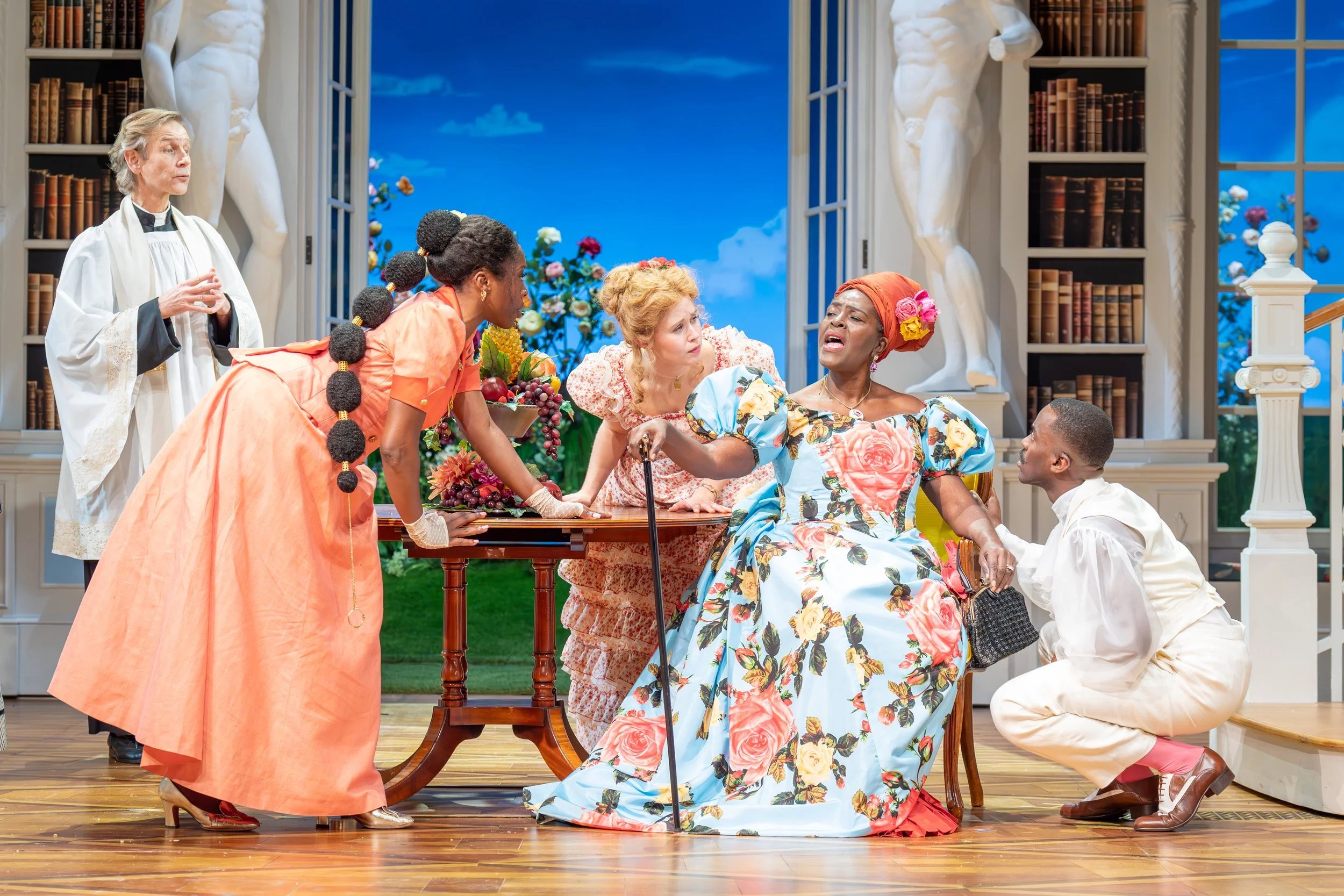
This production makes quite a few choices which pay off tremendously to the in-house audience (ad-libs about gay clubs in London, Bruno Mars songs being plucked on a set piece piano, outright acknowledgement that a gag is being used as cover for a scene change), but the most influential on this production is almost irrefutably the decision to amplify the queer themes of the play. The four lovers are constantly swapping between one another’s arms, and maybe the most interesting choice of all is that to warp Gwendolen and Cecily’s tense rivalry into something a bit more forthrightly sexual. In scenes where so much of talking about sex and love is built by talking around the subjects, having an entire stage introduced with one woman’s head shoved up the other’s skirts is definitely a loaded decision!
While one could argue that it doesn’t add much to either character’s own self or story, it’s impossible not to feel like this is — above all else — a layer of dimensionality added for the audience’s entertainment. It makes everything happening a little bit messier, and isn’t that the fun of a play? In a production so devoted to morphing subtext into foretext, it seems like an inevitable decision to play around with the women’s relationship as well.
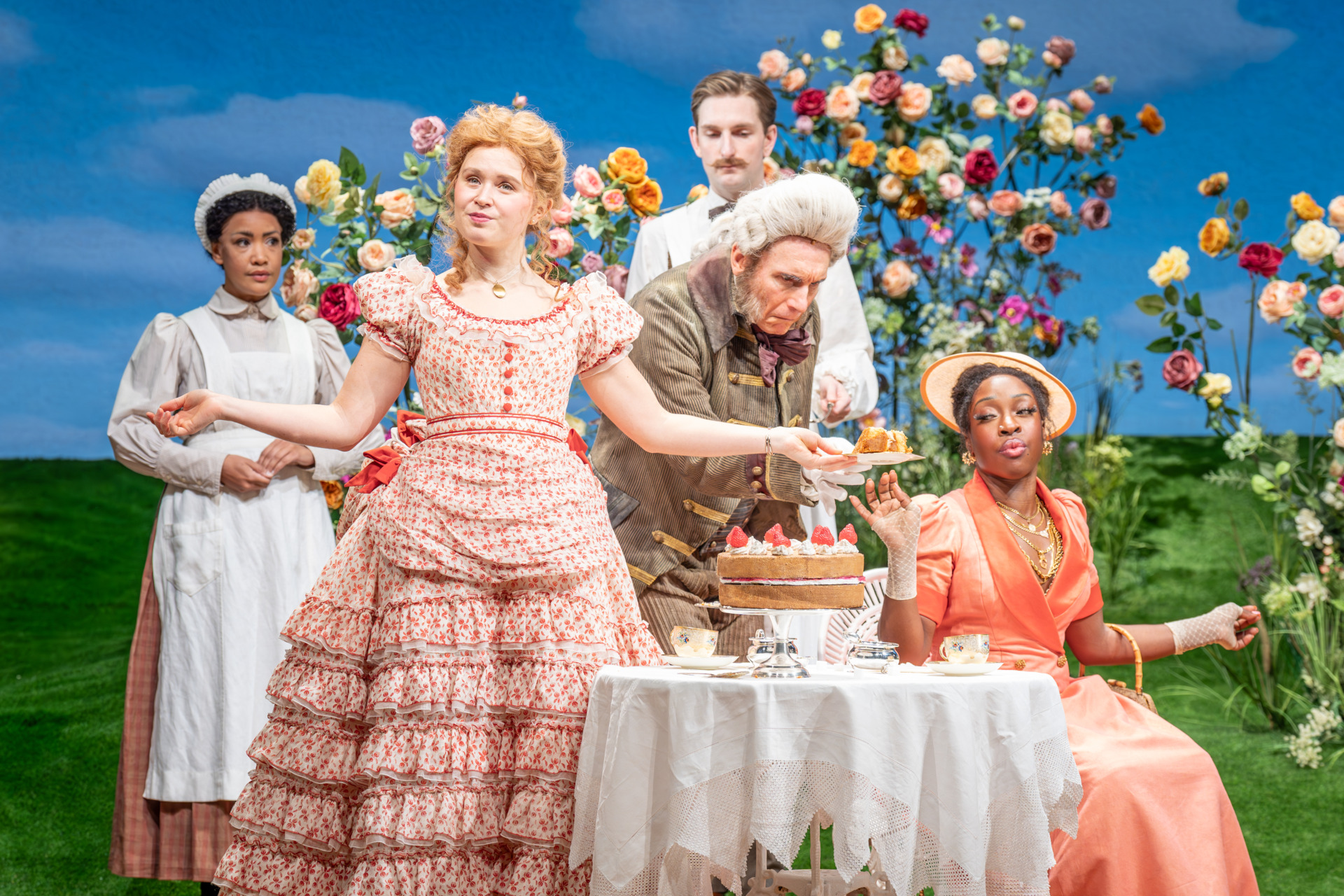
In terms of visuals, this production is utterly lush. The costumes are all gorgeously garish, with bright florals and other intricately weaved fabrics never taking a second off of the stage. Masculine and feminine silhouettes are played around with, giving each character’s clothing a silhouette to say as much about them as they say about themselves. Historical qualities are taken into account and adjusted for modern-day, creating altogether new pieces of clothing— a quality extended into the set dressing, as well.
Set designer Rae Smith describes the execution of the designs as “high camp” in a promotional piece for the National Theatre, and her inspiration shines through. The rose-garden set piece especially borders on a level of unreality that allows for a wide reach of creative expression and an unparalleled level of fun when playing with aesthetics. The rich textures throughout the entire play blend out from the clothing to the decor, giving a cohesive look to what is effectively a library of statement pieces. None of this is even to mention the wigs, which are just as complex and intricate as they are downright fun.
In comparison to its bookends, though, the contents of the play itself are almost down-to-earth (in the loosest possible sense of the term). The introduction and bows have the purest quality of “camp” that the production was aiming for, with Victorian stripteases and enough rhinestones to fill the Mariana Trench. Fog machines and feathers and frills come together to build an image that is so exaggerated in its theatricality that it’s hard to keep your focus on any one thing for more than a moment at a time — personally, I’m quite drawn toward the giant snake worn by Richard Cant.
As somebody who loves to enjoy a play, this production of Earnest is one that I would highly recommend watching — and as someone who doesn’t often have the means to go and see a play, the accessibility of it is greatly appreciated.
If you’re still interested in viewing this production after March 18th, the National Theatre’s streaming service National Theatre at Home is available for subscription, and select National Theatre plays are always available to watch either at your local library or institution’s academic streaming platforms.