

The Oscars: One Snub After Another
When thinking of the modern-day movie industry, what are the most notable pieces of media that come to mind? Is it Marvel? Disney? DC? For the past few decades, the movie industry has been dominated by these million-dollar franchises. Whether they are a part of the superhero scene, or an already established product, there is no doubt that the moment Hollywood sees a cash cow, they cling onto it and milk it dry. Due to how prominent these million-dollar franchises are, it only makes sense for an award show that highlights prospective movies each year to spotlight them, right?
The main thing I want to explore in this article is the integrity of the academy. Throughout the past few years, movies that fall within these franchises have been nominated for best picture. While the argument could be made that perhaps the academy’s taste aligns more with the taste of the billions of people that throw money at these products, or even that most of these movies are genuinely well made, there is one other factor that is important to bring up: ratings. A little research will show how the Oscar’s ratings have declined by about twenty million in the past ten years.
So, does the academy recognize movies based on their quality, or does the academy appeal to these mass audiences to boost their viewership?
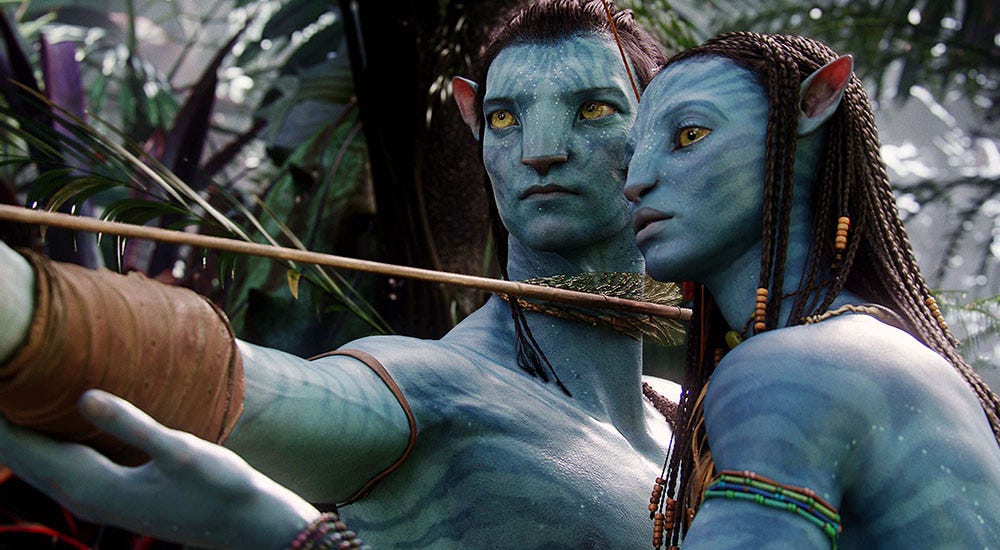
Reflecting on the most notable movie moments within the past few years, there are multiple visuals that come to mind-a planet of blue people (Avatar), Tom Cruise shirtless and in fighter jets (Top Gun: Maverick), or Barbie’s venture out into patriarchal America (Barbie). Each of these films have propelled themselves into the heart of pop culture, generating mass cult following through media platforms such as Tik Tok, Instagram reels, and of course, the one show to capsule them all: the Oscars.
Let’s look into one franchise that has obtained as much audience sway as it has with award buzz: James Cameron’s Avatar series. This is a series that has raked in billions of dollars at the box office, implemented the most innovative and groundbreaking movie technology, and has also managed to secure a spot in the ‘best picture’ running for its first two films. A series of that magnitude should be a staple in film conversation for decades, discussing its themes, characters, narrative, and scope, right?
Sort of. While the visuals have proven to remain in conversation for the longest time, that is the only quality that is talked about in moderation. If asked, can anyone remember the character’s names in the films besides the main character (Jake)? Despite their visual aesthetic, the films have a glaring flaw that can be unpacked through one summary.
A male foreigner, coming from a faraway land with a group of settlers, meets a female local-both of these characters are completely alien to each other. From these paths crossing, a relationship blossoms, igniting a profound love. The progression of this relationship culminates in a battle between these two colonies, leading the female’s indigenous tribe to defend themselves against the male’s group of invaders.
This is the plot to Pocahontas, yet it mirrors the first Avatar’s narrative-beat for beat (with the second one not offering much else in terms of story).
While there is no denying Avatar should be praised for its innovation to craft its story, does two-time best picture nominee really make sense for a formulaic film series? Are movies that provide the same emotional punches that Disney cartoons have thrown (while not adding anything original) really worthy of being in the realm of ‘best picture?’
Bouncing off this, it is only fair to highlight an Oscar ‘snub’ from the year Avatar: The Way of Water got nominated. Nope is an original Jordan Peele Sci-Fi film that weaves in a heavy usage of unsettling sound design in the film’s execution. Through its disturbing usage of sonic ambiguity, it manages to tell a story on its own through the noise it emulates-noise that blurs the line between animal sounds, natural wind, and the alien entity. The audio works hand in hand with the script to tell an engaging, deep, and original tale. It received immediate critical and audience praise following its release, and yet, not one Oscar nomination.

Let’s look at another best picture nominee-Barbie, a movie that was nominated for multiple categories. Barbie ran with Oppenheimer that summer to spark a cinematic phenomenon known as “Barbenheimer,” ushering in a total of $2.4 billion at the box office. There is no doubt both films have something to admire, but what about the smaller scale yet high quality films that were not even recognized by the academy that year? Beau Is Afraid and The Iron Claw are two movies that come to mind. Both depict haunting narratives of manipulation, struggle with identity, loss of control, etc. They are personal, well-crafted in their executions, original, and pack enough punch to leave an impression on any audience member. Aren’t those the types of movies that should have a platform? The ceremony did not recognize these films, but Barbenheimer, the billion-dollar movie event of the year? It most certainly did.
Top Gun: Maverick: the film that is notorious for bringing audiences back to cinemas after the pandemic had wiped them out, so much so that Spielberg himself thanked Tom Cruise for saving cinema. This movie was such a staple in the Oscars, that even an ad for the ceremony featuring the host (Jimmy Kimmel), was designed to mimic a scene from the movie. Top Gun: Maverick was considered one of the highest grossing films of that year, right next to the Avatar sequel, both nominated for best picture. Shocker.
As of April 2025, the academy enforced a new rule-all members of the Academy must watch every nominated film in all categories to be eligible to vote. Of course, this implies that academy members were going off the honor system while voting in major categories. So, have voting and nominating been genuine before, or have academy members let the cultural sway of movies dictate their choices?

– Marty Supreme, One Battle After Another, Sinners
These are just a few films nominated for best picture this year. They are all films that have collectively defined 2025. All over TikTok, Timothee Chalamet’s Marty Supreme verse in “4 raws” rings throughout multiple audios, giving the movie a platform to thrive and receive instant success amongst Gen Z. On Instagram reels, Leonardo DiCaprio’s whistle in One Battle After Another (which he famously would practice during quarantine), still haunts my Instagram algorithm. And of course, Sinners, one of the most talked-about movies amongst Gen Z, is a movie that has now broken records for its nominations in multiple categories. Whether through marketing or word-of-mouth, each of these films have gained the most traction amongst mass audiences. They have sway, they have cult status, and now, they have the attention of the academy.
While I have actually enjoyed many of the films listed above, I think (as a film buff) that there are other films that just deserve Oscar recognition more. I can respect these films on their own, however, the question of whether the ‘best’ of films means the quality or audience reputation is one that should be asked. Regardless (just like every year), I, along with other movie fans, will be waiting to see which movie takes the cake.
