

Wes Anderson and The Royal Tenenbaums
Is it fair to say every Hollywood director has their own distinguishable qualities? When looking at the most notable directors today, their signature film traits are often evident. Tim Burton is known for his gothic aesthetic, Guillermo Del Toro for his monster narratives and design, and Tarantino…well, we know.
It’s also important to consider the modern world of cinema today and how these notable directors operate within that world. It is a world ridiculed with franchise films, a point that I had made in an earlier article. In a world that is so engraved with movies that feel more like a product than art, it makes unique and original films with a voice so incredibly valuable. These types of movies show how important they are in our lives, building a genuine connection between the audience and the characters. It’s more important now than ever to talk about filmmakers who capture that connection in their work through authentic, personal, and stylized cinema. Throughout the past few decades, one director who has cemented themselves in the world of film through their unique movie cadence is Wes Anderson. Throughout his career, Anderson developed a habit of aligning every shot in his movies to be meticulous and polished, using the set pieces as tools to tell a story. This is a prominent feature of one of his earlier movies: The Royal Tenenbaums (2001).
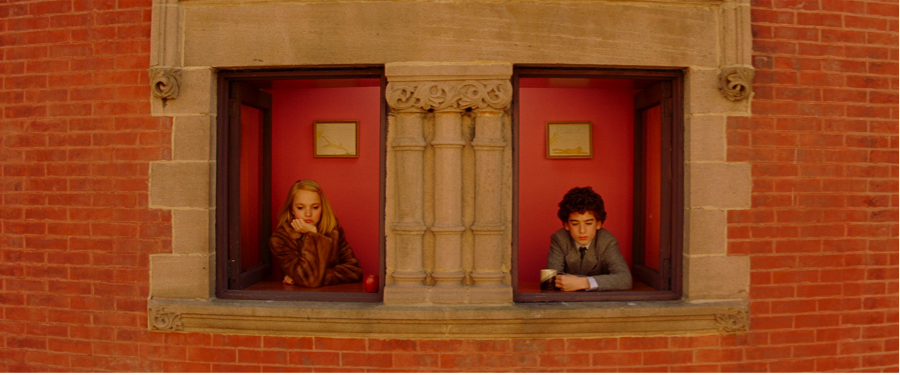
With films like Rushmore (1998) and Bottle Rocket (1996) under his belt, Anderson had already gained traction in Hollywood to credit himself as a unique filmmaker. However, The Royal Tenenbaums was the first film to display his signature style of symmetrical shots. Each character operates within these shots to communicate to the audience who they are as people, as well as their own personal struggles.
Warning: spoilers ahead
Here’s how The Royal Tenenbaums accomplishes this:
In the beginning of the movie, our protagonist, Royal Tenenbaum, tells his children that he and their mom are getting a divorce. Conducting it as if it’s a business meeting, Royal has his children sit across the table while he is at the head of it and no one else is around them, highlighting the distance between Royal and his family. Following this scene, the character’s qualities and environments are introduced within a short montage of title cards and Anderson’s stylized shots.
Chas’ bedroom is filled with financial magazines, a safety deposit box, his office space, his center for bred dalmatian mice, and the deed to his father’s summer house. The narrator also notes that Chas is in the sixth grade. Margot’s room is established with a library of plays and Richie’s through tennis medals, drums, and collection of toy cars. Each one of Royal’s children are passionate young prodigies and exhibit themselves as people that are as flawless and composed as the world around them. This, of course, is anything but true.

Each of the Tenenbaum children are incredible in their own way, especially when it comes to avoiding their problems. Nearly each character practices escapism in some capacity of their life. Whether through faking a terminal illness, keeping their own children on a short leash, living a life of promiscuous secrecy, or just sailing as far away from the family as possible, practically each member of the Tenenbaum family has a knack for avoiding their problems altogether.
This is why Anderson’s execution of this movie is so meaningful. The family members are introduced as these put-together people but are rooted with insecurity and despair. This is where the connection between the audience and Anderson’s characters becomes visible. Each character that practices these coping mechanisms allows us to link our own insecurities with those of the Tenenbaum children, making them grounded, relatable, and, most importantly, interesting.
Of course, fate brings each member back to the Tenenbaum estate. Chas brings his boys to stay there deeming his house ‘unsafe,’ with Margot, Royal, and Richie following shortly after. Royal tells his family he is dying from stomach cancer, prompting him to stay and patch things up with his family, who he knows comically little about. Whether it be through forgetting the names of his children’s spouses, or his children’s own middle names, it is clear that Royal has his work cut out for him in making amends. Seeking to gain his family’s respect, he tirelessly spends the next six days developing a relationship with his family.
While many movies depict characters who are flawed, The Royal Tenenbaums stands out because of two components. One, the many themes that are at play: at its core, it is a story of personal growth, acceptance, and redemption. Each character begins their arcs as morally grey people, who have to learn to change and forgive. Two, the movie also presents its viewers with a world that is so aesthetically pleasing that it lulls its audience members into a state of attentiveness.
Remember how I said Anderson uses visuals to communicate to the audience the characters and the world around them? Chas is depicted wearing a red jumpsuit throughout the course of the movie, with both of his boys sporting the exact same red jumpsuit as their father. While this is easily deciphered as a need for control, we learn that it is more than that. It also highlights Chas’s fear of losing his remaining family — a fear that has manifested into severe paranoia. Richie, on the other hand, physically hides himself with a heavy beard and drawn-out hair, showing his physical disassociation from the rest of the world-which we find out is due to his intense love for Margot (his adopted sister) and the forbidden nature of it.
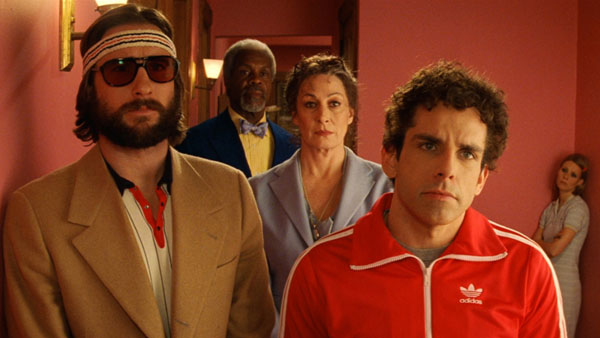
At the end of the movie, Chas learns to accept his wife’s death, his children’s autonomy, and the presence of Royal in the family. Royal redeems himself by being present in the lives of his family leading up to his final days. Richie and Margot pivot away from their ‘love’ and focus on picking up their passions again, this time in ways that give them fulfillment.
It is from each of these character’s arcs that the movie gets its value. It is inspiring for us as the viewers to see these beloved characters overcome their own insecurities and external problems in a triumphant and fulfilling way.
While it is revealed that Royal never had stomach cancer (he was, in fact, using Tic Tacs for medication) and that he debatably had more selfish motives for moving back in with his family (not being out on the street), his effort to ignite a profound relationship with his family is admirable. His charisma combined with his objective makes him such an easy character to root for. Whether his efforts involve taking his grandsons to wreak havoc on the town or taking everyone to visit their grandmother’s tombstone, Royal proves to be on a personal mission of triumphant redemption — a journey that is powerful enough to reach out and speak to any audience member. Throughout its two-hour runtime, Anderson captures his audience’s attention through deeply personal characters, storytelling, and style.
Anderson shows here why he has such a respectable reputation in the world of cinema. He does this through showing us the power of growth and connection through his stylized and comforting world. These are the kind of films that I strongly believe need to be made now. In a time where even the media, the one sole thing that we can use as an outlet to escape, feels artificial, shallow, and formulaic, these movies are incredibly important. This is especially important for people who are navigating the world through adolescence. If you are someone who is in that state of your life, or even if you just love a good movie, this is the watch for you.
