

Ted: An Endearing Series of Stupidity
One morning, I was woken by the commotion of my friends eagerly asking me if I “watched the new season yet?!” My mind immediately began racing to multiple prominent shows (Invincible, The Boys). Excited as to what this new season could be from, I eagerly made my way downstairs. You could probably imagine my surprise when I realized the bursting excitement was coming from the release of Ted Season 2 (2026).
Written and directed by Seth Macfarlane, the show features Ted, a talking bear who is brought to life through the wish of a young boy named John Bennett — played by Max Burkholder. For anyone who may be unfamiliar with Ted, it is easy to interpret this as family-friendly content due to how the story revolves around a young boy and his magical talking pet bear. However, this is anything but the case.
So yes, this young boy brings his teddy bear to life. Now from this divine miracle, do John and his pet bear embark on a heartfelt journey, navigating the world through lighthearted adventures while learning life lessons along the way? Not exactly.
John and his bear do embark on heartfelt adventures — if ‘heartfelt adventures’ include getting their mother arrested, getting their school charged with $5,000 in sex hotline charges, and doing the absolute most to avoid any responsibility for their actions.
Before watching this show, I basically knew what to expect — a mindless, raunchy, turn-your-brain off stoner adventure. As someone who grew up watching Seth MacFarlane content (Family Guy, American Dad), I was no stranger to this genre of media. However, as I was watching I noticed something genuinely special about this one.
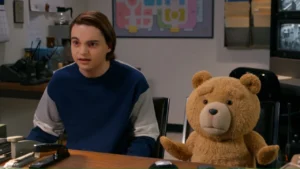
Each character has a connection developed with the audience, getting enough time to individually be fleshed out in their own stories. The mother, Susan, is innocent yet incredibly loveable in her nature and wants nothing else than to spend the most amount of time possible with her family. Matty, the hot-headed Italian father, is so incredibly insecure, stubborn, and volatile that just hearing the Red Sox’s losing streak is enough to almost cause a fatal heart attack. Matty and Susan’s niece, Blaire, is presented to be in a transitional period into adulthood, which allows for storylines that revolve around gaining her independence as a woman, as well as adjusting to the absurdity of the Bennett household. Finally, there’s John and Ted, who wind up in the middle of the most absurd plotlines known to man. With storylines that include Ted sneaking around with his wealthy human mistress and creating fabricated newspapers to shelter their bedridden father from the Sox’s losing streak, both characters endure batsh*t scenarios that mostly go wrong and then proceed to learn nothing in the process. Despite their dysfunctional nature (and despite the appeal of this show revolving around a talking bear), the Bennett family as a whole are the heart and soul of the show.
Each episode presents us with the family dynamics of the Bennetts in different ways — each through their own story structures. One standout episode depicts Susan going to jail after taking responsibility for John and Ted’s possession of drugs. During her time in jail, she changes the lives of the other inmates by showing them the importance of kindness and humility in a place that fosters anything but. Meanwhile, back at home, the boys are shown to be completely incompetent in taking care of the house on their own, and through this ineptitude, we are shown the value that Susan holds in their lives.
There is also the episode where Blaire realizes she’s pregnant and opts to get an abortion. Matty takes it upon himself to kidnap the RA on Blaire’s floor (who he thinks is the father) and bring him to the house to interrogate him. When Matty realizes this is a misunderstanding and the RA is not the father, does he apologize? Does the RA take legal action for kidnapping? No, rather, the RA stays for dinner, Matty and him bond over their political ideologies, and eventually Matty even offers him a place in his bed to sleep, which the RA happily accepts.
Even when committing the most heinous atrocities (which occurs in about every episode) these characters still remain interesting thanks to the focus they get in each episode, their charm as people, and the absurdist world that MacFarlane creates around them that condones their behavior.
It’s moronic, it’s absolute brain rot, but by god it is worth the time.
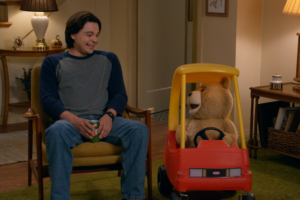
So, I know what you’re thinking — what is so special about the most screwball comedy? Well, despite the absurd antics the characters go through (and the deranged world they live in), something more profound comes from it, something much more relevant and personal.
As I peered around my living room during the premiere of Ted, I noticed something more meaningful than anything a talking bear has offered me before. It was the first time all of my friends had been together in months. The mere absurdity and stupidity of the show (as well as our sense of humor) allowed us to come together and bask in the mere idiocracy of the events unfolding in front of us. It is a show that ultimately presents itself as dumb, but underneath its moronic surface, there is an emotional and family-oriented core that beats. Even the ‘dumb’ that the show displays is the kind of dumb that sparks gatherings with your friends and generates fulfilling memories. So, a show that I never thought I would recommend — one that is so mind-numbing on the surface — turns out to be one of the most endearing and heartfelt once those layers are peeled back. So, I’m actually recommending it.
It’s easy to laugh it off and call it dumb, but being able to tune in to this world and escape is the kind of escape that people need. It requires about the same amount of brainpower as Family Guy, but in the absolute best way possible. It offers its audience an unapologetic escape from reality, and personally, I think we can all use a little bit of that.
